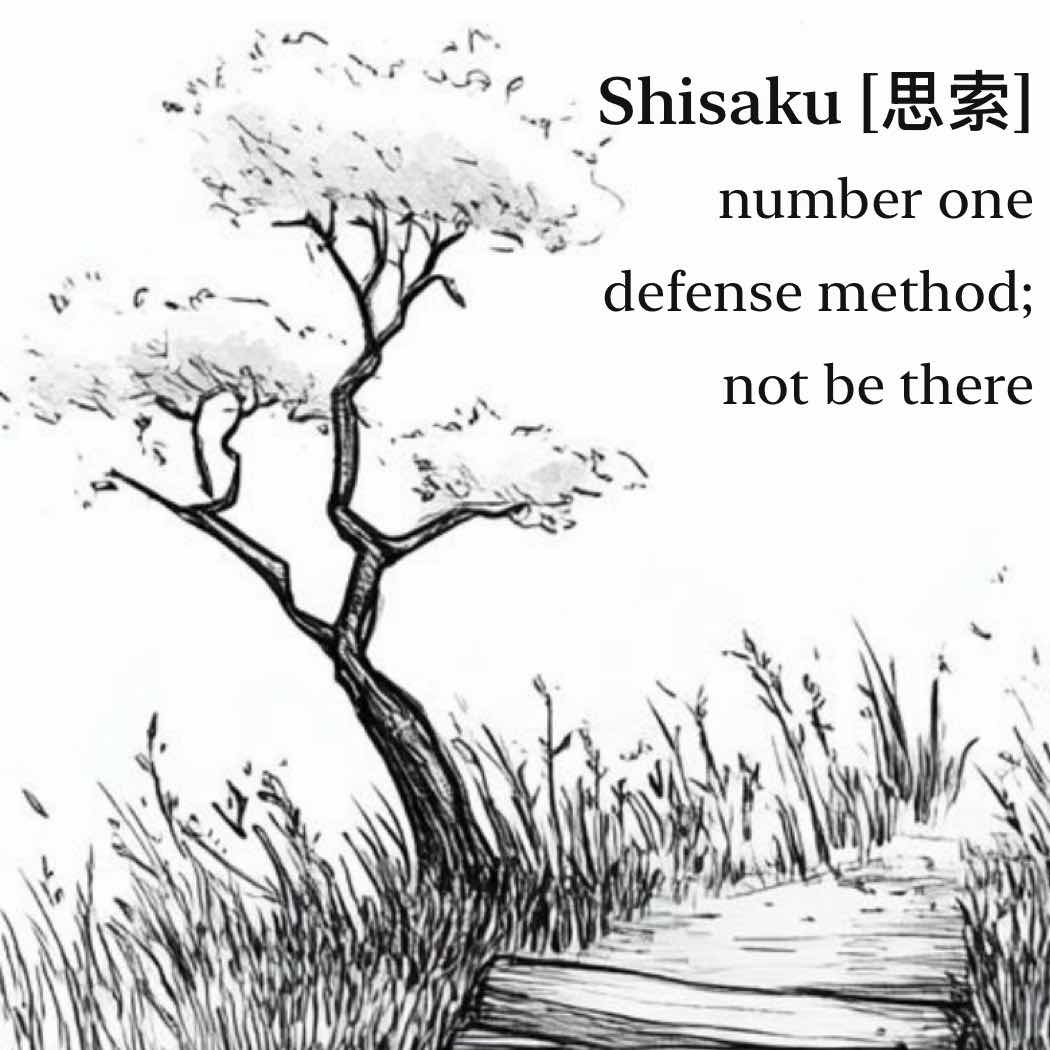
Bun means "civil" and jutsu can mean, "art, technique, method" while the two together mean "civil method". Why do I advocate practicing the jutsu form in parallel with the "do" or "way"? Simple, we as citizens have a good deal of laws that in lieu of diminishing the capabilities of the criminals they instead cause restrictions as to how we can protect ourselves.
Laws today seem to favor the criminal more than the victims or citizens so that when you take up arms to defend yourself you could very well be liable for arrest as much or even more than the criminal you were protecting yourself from in the first place.
Even tho this viewpoint may be in the extreme I still feel that in modern times we are being forced into a weapons ban similar in nature to the one imposed on the Okinawan's. Think about it, the restrictions on the arms we may have and use are getting greater and greater each year. We may not have had a weapons ban implemented in one fell swoop yet we are slowly heading in that direction.
I realize that the ole saying of banning weapons means only criminals will have weapons seems insignificant yet it is true for criminals do not obey the law to begin with and if the punishment fits properly, which it does not, then they usually pay that price after the crime and only if they get caught.
So, as I go on a tangent let me emphasis that the reason I feel the we must focus on the jutsu and do aspects in parallel is that we are under a growing weapons ban and the only true way to defend ourselves, our families, our neighborhoods, and our communities is to be proficient in the martial arts.
Even then if they found out you were such and such a rank then you could still be liable for prosecution.
Think about it, consider it thoroughly. Remember that sport martial arts is not the same as they impose rules on your actions. The street or civil defense is not run by rules, there are no rules.
Tuesday, July 22, 2008
Friday, July 18, 2008
Rei - why we do it! - 2
Click the title to review the previous posting :-)
It was very interesting for me to come across the following statement in a book I have been reading on body language. Apparently when someone does this action either consciously or subconsciously they are indicating regard for the person they bow to. I quote:
"Whether done consciously or subconsciously, the torso bow is a nonverbal gesture of regard for others." - Joe Novorro, What Every BODY is Saying
I find this very interesting and suggest it as a response to a student, along with all the other reasons why we bow in the dojo, when they question why they have to do it. This will especially make the point when they feel it may be subservient or of a religious nature.
Something to think about?
It was very interesting for me to come across the following statement in a book I have been reading on body language. Apparently when someone does this action either consciously or subconsciously they are indicating regard for the person they bow to. I quote:
"Whether done consciously or subconsciously, the torso bow is a nonverbal gesture of regard for others." - Joe Novorro, What Every BODY is Saying
I find this very interesting and suggest it as a response to a student, along with all the other reasons why we bow in the dojo, when they question why they have to do it. This will especially make the point when they feel it may be subservient or of a religious nature.
Something to think about?
Thursday, July 17, 2008
Haragei (moving from the center)
What is it?
It is a good deal both physically and philosophically but basically it is the physical art of controlling and moving from one's center. This center is that band of muscles that surround your midsection. Hara and Ki are intricate parts of this practice and some believe that they reside about two to three inches below the navel.
I believe that this is true in a fashion and I also believe that the hara is that entire band that surrounds your midsection.
When we first learn of this method we find it difficult especially since we are conditioned to use mainly the upper body strength (men) to get it done. This is ok for the young yet if you want to truly learn this method and benefit from it then train/practice to do everything and every movement from the hara.
Why? Consider this as the basis for why, any reorientation of our bodies requires energy and balance which originates in our midsection or hara. In body mechanics the midsection is paramount in generating true one punch/kick stopping power. Proper body alignment, balance, and mechanics for the physical parts is important and when combined and performed as one (all things begin with "one") then you are truly on your way to mastering your art.
Focus your movements so they originate from the hara. If your are anchored properly to the earth and then generate power from the hara to all points used in the body with a solid connection to the earth then you will find a good deal of benefits received of which power, speed, and ability are only the outer ones of your art.
So, do everything from the center or the hara. Practice this aspect of haragei and then research and learn all that goes with the art of haragei.
It is a good deal both physically and philosophically but basically it is the physical art of controlling and moving from one's center. This center is that band of muscles that surround your midsection. Hara and Ki are intricate parts of this practice and some believe that they reside about two to three inches below the navel.
I believe that this is true in a fashion and I also believe that the hara is that entire band that surrounds your midsection.
When we first learn of this method we find it difficult especially since we are conditioned to use mainly the upper body strength (men) to get it done. This is ok for the young yet if you want to truly learn this method and benefit from it then train/practice to do everything and every movement from the hara.
Why? Consider this as the basis for why, any reorientation of our bodies requires energy and balance which originates in our midsection or hara. In body mechanics the midsection is paramount in generating true one punch/kick stopping power. Proper body alignment, balance, and mechanics for the physical parts is important and when combined and performed as one (all things begin with "one") then you are truly on your way to mastering your art.
Focus your movements so they originate from the hara. If your are anchored properly to the earth and then generate power from the hara to all points used in the body with a solid connection to the earth then you will find a good deal of benefits received of which power, speed, and ability are only the outer ones of your art.
So, do everything from the center or the hara. Practice this aspect of haragei and then research and learn all that goes with the art of haragei.
Tuesday, July 15, 2008
Conflict:
(Disclaimer: I am not a conflict resolution expert and I don't claim to have it mastered. Far from it as I am subject to the same things as everyone else yet I do realize I have a deficiency in many area's of this being only one. So don't take it personally. Take a moment to consider what I have to say and see if there is any value in it for you, personally)
Defined: A state of opposition between persons or ideas or interests; also dispute: a disagreement or argument about something important.
Is this not the crux of all matters of the martial way in regards to its combative or defensive nature? Is this also something that always results in the physical (i.e. hitting, kicking, etc)?
Recently I have been a bystander to a conflict that if handled properly could have averted the ongoing battle between two entities. I say this because I firmly believe that we can avoid conflict if we train properly and take the proper attitudes to resolve any and all conflicts to the benefit of both parties.
Ask yourself after you have been confronted is there something I could have done, said, etc that would have been a more efficient way to resolve the opposition perceived by yourself and/or the other party(ies). Conflict is simply a state of mind that is and always will be a result of the "ego" and its perception of a need, some value, or particular interests that when perceived by the parties results in discord.
When we reach this stage we feel, due to our "ego", that we have lost something of value to us regardless of whether it is monetary or a perceived value.
If we took the time to really analyze ourselves and our situations; in the present moment; moment by moment; then maybe we could avoid conflict, discord, disagreement, etc. What do you think?
A complex subject to say the least and if we are not studying conflict avoidance and resolutions as a part of our training then, are we actually following the way or are we just practicing a more advanced way of conflict.
Is not the avoidance or resolution of conflict actually never entering into a conflict to begin with. Is this not similar to observing our environment so we may avoid situations that lead to being available for physical attacks.
I realize that to practice the way involves the physical and when those rare moments do occur where we have to resort to the physical we practice physical means that would resolve that conflict; yet, is it not our first responsibility to be persons of character who resolve such things before they become aggressive in nature.
I participate in many groups of discussions on the martial arts and ways. In that form of learning and participation I see many "flames" that escalate into all out war on the Internet simply because we tend to jump first and think later. We tend to let our "ego" control our actions when we could save ourselves a good deal of discomfort and pain by staying in the moment and practicing those techniques that would avert such things before they grow into the monsters they are.
Practice and train in avoidance and proper resolution to conflict. Study this carefully and thoroughly!
Defined: A state of opposition between persons or ideas or interests; also dispute: a disagreement or argument about something important.
Is this not the crux of all matters of the martial way in regards to its combative or defensive nature? Is this also something that always results in the physical (i.e. hitting, kicking, etc)?
Recently I have been a bystander to a conflict that if handled properly could have averted the ongoing battle between two entities. I say this because I firmly believe that we can avoid conflict if we train properly and take the proper attitudes to resolve any and all conflicts to the benefit of both parties.
Ask yourself after you have been confronted is there something I could have done, said, etc that would have been a more efficient way to resolve the opposition perceived by yourself and/or the other party(ies). Conflict is simply a state of mind that is and always will be a result of the "ego" and its perception of a need, some value, or particular interests that when perceived by the parties results in discord.
When we reach this stage we feel, due to our "ego", that we have lost something of value to us regardless of whether it is monetary or a perceived value.
If we took the time to really analyze ourselves and our situations; in the present moment; moment by moment; then maybe we could avoid conflict, discord, disagreement, etc. What do you think?
A complex subject to say the least and if we are not studying conflict avoidance and resolutions as a part of our training then, are we actually following the way or are we just practicing a more advanced way of conflict.
Is not the avoidance or resolution of conflict actually never entering into a conflict to begin with. Is this not similar to observing our environment so we may avoid situations that lead to being available for physical attacks.
I realize that to practice the way involves the physical and when those rare moments do occur where we have to resort to the physical we practice physical means that would resolve that conflict; yet, is it not our first responsibility to be persons of character who resolve such things before they become aggressive in nature.
I participate in many groups of discussions on the martial arts and ways. In that form of learning and participation I see many "flames" that escalate into all out war on the Internet simply because we tend to jump first and think later. We tend to let our "ego" control our actions when we could save ourselves a good deal of discomfort and pain by staying in the moment and practicing those techniques that would avert such things before they grow into the monsters they are.
Practice and train in avoidance and proper resolution to conflict. Study this carefully and thoroughly!
Monday, July 14, 2008
Stages Before Physical Confrontation
There are three stages we all go thru before we reach physical conflict. The very first is to freeze. This is something we naturally do when some form of aggression or danger comes our way. This gives us time to take it all in, evaluate it, then come to one of two conclusions.
In nature the second stage is always "flight". It is normal to want to move away from danger. Our natural tendency is to move away from aggression or any danger for that matter. If you feel the heat from the stove do you not instinctively move quickly away from the danger. This is our first choice in any conflict. We can choose to flee from the conflict.
The third stage is to "fight". This is the last stage and the other choice you have when aggression or danger comes our way. Do we stay and face it/fight it out? Is this the true way of the fist? Or is it a choice we make or is it forced upon us?
If it is forced upon us does that mean we failed to follow the way and choose the better of the two choices by leaving the aggressive/dangerous atmosphere/environment?
We are all misinformed in the old adage of "fight or flight" response. The human nature of all, be it man or animal, is to "freeze", "flight", or "fight". Notice the use of "or" in this context for we all have a choice to "flight" or "fight".
What choice do you make and why? Study this thoroughly!
In nature the second stage is always "flight". It is normal to want to move away from danger. Our natural tendency is to move away from aggression or any danger for that matter. If you feel the heat from the stove do you not instinctively move quickly away from the danger. This is our first choice in any conflict. We can choose to flee from the conflict.
The third stage is to "fight". This is the last stage and the other choice you have when aggression or danger comes our way. Do we stay and face it/fight it out? Is this the true way of the fist? Or is it a choice we make or is it forced upon us?
If it is forced upon us does that mean we failed to follow the way and choose the better of the two choices by leaving the aggressive/dangerous atmosphere/environment?
We are all misinformed in the old adage of "fight or flight" response. The human nature of all, be it man or animal, is to "freeze", "flight", or "fight". Notice the use of "or" in this context for we all have a choice to "flight" or "fight".
What choice do you make and why? Study this thoroughly!
Friday, July 11, 2008
Situational Awareness
Situational awareness is that sense you develop through practice which is to be aware of where one is at all times. It is a solid mental picture of exactly what is going on all around you at all times. It is another description of what we strive to attain in practice called zanshin ( a mental and spiritual awareness).
Situational awareness is not just seeing but observing everything and everyone around you. This includes both what you perceive as to sound but also what you perceive in nature such as body language. This goes beyond "tells" of an individual but the "tells" of your surroundings.
Take this test. Walk into a room such as a lunch room, turn around three hundred sixty degrees twice, walk out of the room, and now try to describe in as much detail as possible everything you observed. Can you do it?
We must make situational awareness an integral part of our study of the martial ways. Study this carefully and diligently.
Situational awareness is not just seeing but observing everything and everyone around you. This includes both what you perceive as to sound but also what you perceive in nature such as body language. This goes beyond "tells" of an individual but the "tells" of your surroundings.
Take this test. Walk into a room such as a lunch room, turn around three hundred sixty degrees twice, walk out of the room, and now try to describe in as much detail as possible everything you observed. Can you do it?
We must make situational awareness an integral part of our study of the martial ways. Study this carefully and diligently.
Tuesday, July 08, 2008
Tells - General
Tells are complicated. No one tell is definitive in nature. No one tell can indicate any particular emotion and/or possible action. You have to understand that the process of learning to read aggressive body language so you can perceive physical aggressive contact is a process of seeing, interpreting correctly, and acting properly on a series of "tells".
This is the most difficult part of using "tells", especially in combative or possible combative situations. One particular "tell" if used alone my be perceived as physically aggressive leading to a fight yet if you react to it with physical aggression in a counter then you can possibly become the aggressor and no longer the victim.
Think of it as a person who suddenly lunges forward into your space. You may think this means you need to defend yourself when it may just mean the person is posturing. This action could simply be an attempt to show dominance and tell you that he or she does not want you to mess with them. If your action is appropriate they may move away. If your action were more physical you could be the person causing the fight.
Tells, a very difficult type of training and practice. One must be careful and one must study hard to understand what "tells" needs action and what "tells" merely means you need to show non-aggressive yet confidence in yourself type action.
Train well in "tells" and train wisely.
This is the most difficult part of using "tells", especially in combative or possible combative situations. One particular "tell" if used alone my be perceived as physically aggressive leading to a fight yet if you react to it with physical aggression in a counter then you can possibly become the aggressor and no longer the victim.
Think of it as a person who suddenly lunges forward into your space. You may think this means you need to defend yourself when it may just mean the person is posturing. This action could simply be an attempt to show dominance and tell you that he or she does not want you to mess with them. If your action is appropriate they may move away. If your action were more physical you could be the person causing the fight.
Tells, a very difficult type of training and practice. One must be careful and one must study hard to understand what "tells" needs action and what "tells" merely means you need to show non-aggressive yet confidence in yourself type action.
Train well in "tells" and train wisely.
Monday, July 07, 2008
Tells and Karate
Tells are those body indicators that "tell" you that you are about to be attacked. This definition is specific to combative situations where one is going to enter into a physical confrontation. Tells go way beyond such physical confrontations and should be studied outside of actual kumite/combat for they will provide you with a good deal of information about the person or persons you come in contact with in life. I highly recommend reading, "What Every BODY is Saying" by Joe Navarro.
Even tho his book does not provide specific tells for aggression you will find some enlightening information that you can associate with your martial arts practice. This type of "tell" provides enlightenment as to what you should be teaching and practicing not just for combative situations but for life situations as well.
I have found that most training does not specifically address the practice of reading body language or "tells" and rely heavily on the practitioner "picking it up" through their kumite practice, etc. Add this one to your training and teaching and you will provide your student with a gift that will benefit them in combat, kumite, the boardroom, and in relationships both romantic and in general.
The "tell" of life. Make it an important part of your training/practice!
Even tho his book does not provide specific tells for aggression you will find some enlightening information that you can associate with your martial arts practice. This type of "tell" provides enlightenment as to what you should be teaching and practicing not just for combative situations but for life situations as well.
I have found that most training does not specifically address the practice of reading body language or "tells" and rely heavily on the practitioner "picking it up" through their kumite practice, etc. Add this one to your training and teaching and you will provide your student with a gift that will benefit them in combat, kumite, the boardroom, and in relationships both romantic and in general.
The "tell" of life. Make it an important part of your training/practice!
Thursday, July 03, 2008
Your Constructive Comments Wanted!
I know I have asked this previously yet it does warrant a repeat.
I am not all knowing. I am not the end authority on the subject of Isshinryu, the martial arts, koryu, and so on...
What this means is that I welcome any constructive comments on any and all of my postings here for just that reason. I know sometimes my postings come across as if it were gospel when in reality it is just my mindless meanderings.
I welcome constructive comments especially when your opinions differ. It is that difference that allows us to grow, prosper, and continue to learn. I want to continue to grow, prosper, and learn. The best way for that to occur is to hear differing opinions on the various subject matter I spew forth on this blog.
I am grateful when you agree and hopefully learn from my meanderings and I am more grateful when you give me your opinions that cause me to pause and more importantly provide me growth through change.
I accept all comments that are constructive in nature and use them to contemplate what I feel I know so I can make the changes necessary for me to grow, prosper, and learn.
So, please, if you read something that you don't agree with or feel is outright wrong then let me know by making a comment so I can learn from your experiences.
Kanpai Karate-ka!
I am not all knowing. I am not the end authority on the subject of Isshinryu, the martial arts, koryu, and so on...
What this means is that I welcome any constructive comments on any and all of my postings here for just that reason. I know sometimes my postings come across as if it were gospel when in reality it is just my mindless meanderings.
I welcome constructive comments especially when your opinions differ. It is that difference that allows us to grow, prosper, and continue to learn. I want to continue to grow, prosper, and learn. The best way for that to occur is to hear differing opinions on the various subject matter I spew forth on this blog.
I am grateful when you agree and hopefully learn from my meanderings and I am more grateful when you give me your opinions that cause me to pause and more importantly provide me growth through change.
I accept all comments that are constructive in nature and use them to contemplate what I feel I know so I can make the changes necessary for me to grow, prosper, and learn.
So, please, if you read something that you don't agree with or feel is outright wrong then let me know by making a comment so I can learn from your experiences.
Kanpai Karate-ka!
Wednesday, July 02, 2008
Rei - why we do it!
Why do we use "rei" or the act of bowing in the martial arts. This important part of the practice of the way can be misconstrued as something demeaning or subservient. This is not true and it should be explained clearly to students who are considering following the way of the empty hand.Bowing relates to humbleness, respecting our seniors differences and styles of teaching; the unclouded and empty mind of humility is a hallmark of those who follow the way. As we practice we respect those both above and below us in experience. We must help those in both area's and through "rei" we show it physically and with the aura it projects to those we train with in following the way.
We seldom play one role in the practice of the way for we may be required to assume the duties and responsibilities of a kohai, sempai, and sensei.
Rei or bowing is to be done with proper mental and physical attitude and expression. It is not a subservient act and it is not done meekly. If the bow is done correctly then it reflects the respect for all of life and it stems from a deeply founded confidence in the essential ideology that we are all connected.
Perform rei with dignity. Perform rei with a caring and polite demeanor. It is not just a mechanical thing we are required to do but a manner of expressing "good manners". It is a sincere outward expression of the compassion and respect we have for what we are doing, who is honoring us with their instruction, those who follow us in our example, and those who came before all of us.
Rei or bowing is also a means by which a practitioner coordinates both the mind and body which is paramount in the following of a "Do". To hold a bow a bit longer and a bit deeper is the expression of respect and greater formality.
To bow correctly is to be graceful. It should be centered and performed from the hara in all the movement. To bow correctly helps train the practitioner to move correctly and efficiently while keeping unity in mind and body. It provides a means to develop correct posture and body alignment. It provides lower back flexibility that drops down into the pelvis. All correct for any martial art.
It promotes a sensitivity to others in the dojo for it requires, if done correctly, awareness of your surroundings. Every movement in following the way has purpose and provides training in many aspects to include life itself. I guess this is why they call it the "Way".
Remember that bowing have purpose that extends beyond the dojo, beyond politeness, and beyond gratitude to our teachers and fellow deshi.
Let rei serve as your constant reminder of why you chose to start following the way and to constantly practice. It acts as an outward measure of whether you are awake during practice. It allows us a means of outwardly showing the connection of our mind and body, our heart in our practice of the way of the empty hand.
Let your practice of rei be one that develops within each of you constant awareness, understanding, respect, gratitude, and compassion as qualities of life.
Bibliography
Davey, H. E. Living the Japanese Arts & Ways: 45 Paths to Meditation & Beauty. Berkeley: Stone Bridge Press, 2003.
Subscribe to:
Posts (Atom)